
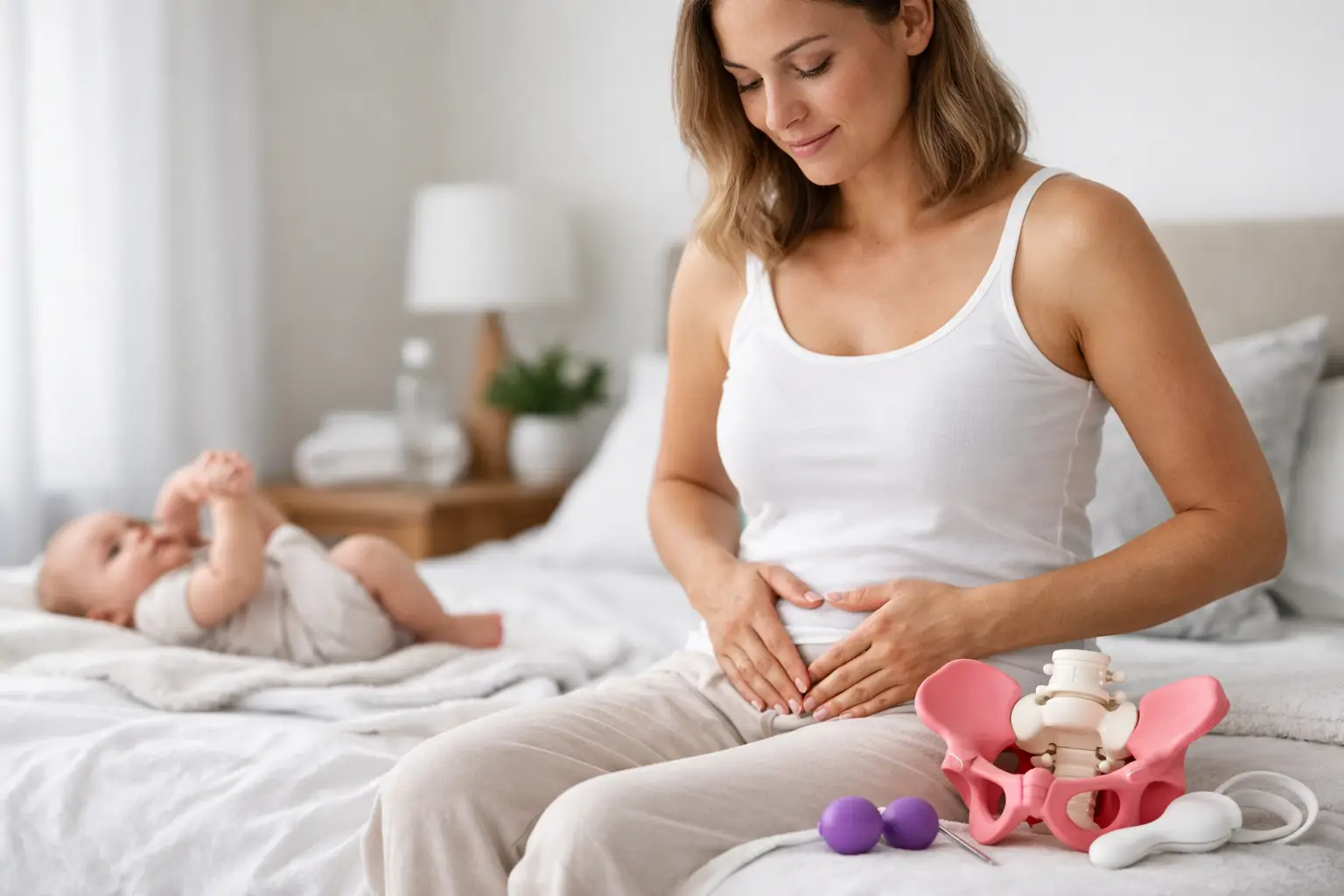
The first time you leak urine when you laugh, feel heaviness after a walk, or notice pain that was not there before delivery, it can be hard to tell what is normal healing and what is a sign to get help. Pelvic health after childbirth is not just about one symptom. It affects how you move, use the bathroom, return to exercise, have sex, lift your baby, and feel in your own body.
For many women, the biggest frustration is not the symptom itself. It is the uncertainty. Friends may say, “That happens after kids,” while online advice swings between “just rest” and “start these exercises right away.” The truth sits in the middle. Recovery is real, but pelvic symptoms should not be brushed off as the price of becoming a parent.
Why pelvic health after childbirth matters
Pregnancy and delivery place a significant load on the muscles, connective tissue, nerves, and joints of the pelvis. That is true after both vaginal and cesarean births, although the effects can look different. During pregnancy, the abdominal wall stretches, the pelvic floor supports increasing pressure, and hormones change tissue flexibility. Labor and delivery can add further strain through pushing, tearing, episiotomy, forceps or vacuum assistance, prolonged positioning, or surgical incision.
After birth, your body is healing while also adjusting to feeding, lifting, carrying, poor sleep, and repetitive baby care tasks. That combination is why symptoms often show up not only in the first few weeks, but later – when activity starts to increase.
Pelvic health concerns can affect daily function in very practical ways. You may avoid exercise because of leaking, feel anxious about urgency when leaving the house, or experience pelvic pain that makes sitting and intimacy difficult. Some women notice low back, hip, or tailbone pain that seems unrelated at first but is tied to how the core and pelvic floor are recovering.
What can be normal, and what should not be ignored
Some symptoms are common early in healing. That does not always mean they should simply be endured.
In the first postpartum weeks, it is common to have soreness, bleeding, fatigue, pressure with activity, and a general sense that your body does not yet feel coordinated. Mild urinary leakage right after delivery can also happen, especially with coughing or sneezing. If you had a cesarean birth, incision discomfort and abdominal weakness are also expected parts of recovery.
What deserves closer attention is persistence, worsening symptoms, or anything that interferes with daily life. Ongoing leakage, bowel difficulty, pelvic heaviness, pain with intercourse, painful scar tissue, abdominal doming, severe tailbone pain, or a feeling that something is “falling out” are not issues to ignore. The same goes for symptoms that limit your ability to walk, lift, work, exercise, or care for your child comfortably.
A good rule of thumb is simple: if a symptom continues beyond the early healing window, returns when you try to resume activity, or makes you change your behavior to cope, it is worth an evaluation.
Common postpartum pelvic health issues
Urinary leakage and urgency
Stress incontinence, which means leaking with pressure such as coughing, jumping, or lifting, is common after childbirth. So is urgency, where the urge to urinate feels sudden and hard to control. These issues may come from pelvic floor weakness, but they can also involve poor coordination, tension, breathing mechanics, bladder habits, or pressure management. That is one reason generic advice to “just do Kegels” often falls short.
Pelvic pressure and prolapse symptoms
Some women describe a heavy, dragging, or bulging feeling in the vaginal area, especially later in the day or after standing and lifting. This can be related to pelvic organ prolapse, where the bladder, uterus, or rectum shifts downward because support structures have been strained. Severity varies. Some cases improve significantly with pelvic floor therapy, activity modification, breathing retraining, and strengthening around the hips and trunk.
Pain with intercourse or pelvic exams
Pain is not uncommon after tearing, episiotomy, scar formation, or pelvic floor overactivity. Hormonal changes can also affect tissue sensitivity, especially during breastfeeding. But painful sex should not be accepted as your new normal. Treatment may include scar mobility work, pelvic floor relaxation, stretching, positioning strategies, and gradual return to tolerance.
Core weakness and abdominal separation
Many postpartum women notice abdominal weakness, doming, or a gap at the midline, often called diastasis recti. The issue is not just the width of the separation. Function matters more. If the abdominal wall is not managing pressure well, it can contribute to back pain, heaviness, and difficulty with lifting or exercise.
Low back, hip, and tailbone pain
The pelvis does not work in isolation. When pelvic floor muscles, abdominal muscles, breathing patterns, and posture are not working together well, the result can be pain in neighboring areas. Tailbone pain after delivery, for example, may relate to muscle tension, joint irritation, or delivery-related trauma.
Why self-treatment has limits
There is a lot of postpartum advice available, and some of it is helpful. Gentle walking, rest, hydration, and gradual return to movement all matter. But pelvic recovery is individual. The right plan depends on your birth history, symptoms, tissue healing, activity level, and goals.
One woman may need help learning how to relax an overactive pelvic floor. Another may need better strength and timing. A third may be dealing with scar sensitivity, prolapse symptoms, or bowel dysfunction. Even when two people have the same symptom, the reason behind it may be different.
That is why evaluation matters. Treatment should match the problem, not just the label.
How pelvic floor physical therapy can help
A pelvic health physical therapy evaluation looks at the full picture. That often includes posture, breathing mechanics, abdominal control, hip strength, mobility, scar tissue, pressure management, and pelvic floor muscle function. Internal assessment may be part of care when appropriate and with your consent, but it is not the only tool. Good treatment is respectful, individualized, and based on your comfort level.
Care may include hands-on treatment, guided exercise progression, education about toileting and bladder habits, lifting mechanics, return-to-running support, and strategies to reduce strain during daily tasks. For someone newly postpartum, therapy may focus on healing and restoring control. For someone months or years out, it may focus on resolving symptoms that never fully went away.
This is where individualized rehab makes a difference. A postpartum body does not need punishment or a rushed fitness plan. It needs the right progression.
When to seek care
You do not need to wait until symptoms are severe. In many cases, earlier treatment helps recovery move more smoothly.
Consider an evaluation if you have leakage beyond the first weeks after birth, pelvic pressure, pain with intercourse, bowel issues, persistent abdominal weakness, or pain in the pelvis, low back, hips, or tailbone that is not improving. It is also reasonable to seek help if you want guidance returning to exercise, especially running, lifting, or higher-impact activity.
Some women come in at six to eight weeks postpartum to make sure healing is on track. Others reach out much later, after realizing symptoms are still affecting daily life a year or more after delivery. Both are appropriate. There is no deadline for getting help.
In Minnesota, direct access to physical therapy can remove one barrier to care. At Saunders Therapy Centers, that means you can start with a free consultation and get a clearer sense of what is going on without waiting to navigate more steps first.
What recovery often looks like
Postpartum pelvic recovery is rarely a straight line. You may feel better, do more, and then notice symptoms flare when sleep gets worse or activity ramps up. That does not always mean something is wrong. It often means your body needs a better progression, more support, or a different strategy.
Improvement usually comes from consistency rather than intensity. Small changes in how you breathe during lifting, how you coordinate your core, how you manage constipation, or how you return to exercise can make a meaningful difference over time. And when treatment is specific to your body and goals, progress tends to be more efficient.
If something still feels off after childbirth, trust that signal. Pelvic symptoms are common, but they are treatable, and getting answers can be the first real step toward feeling stronger and more comfortable again.