
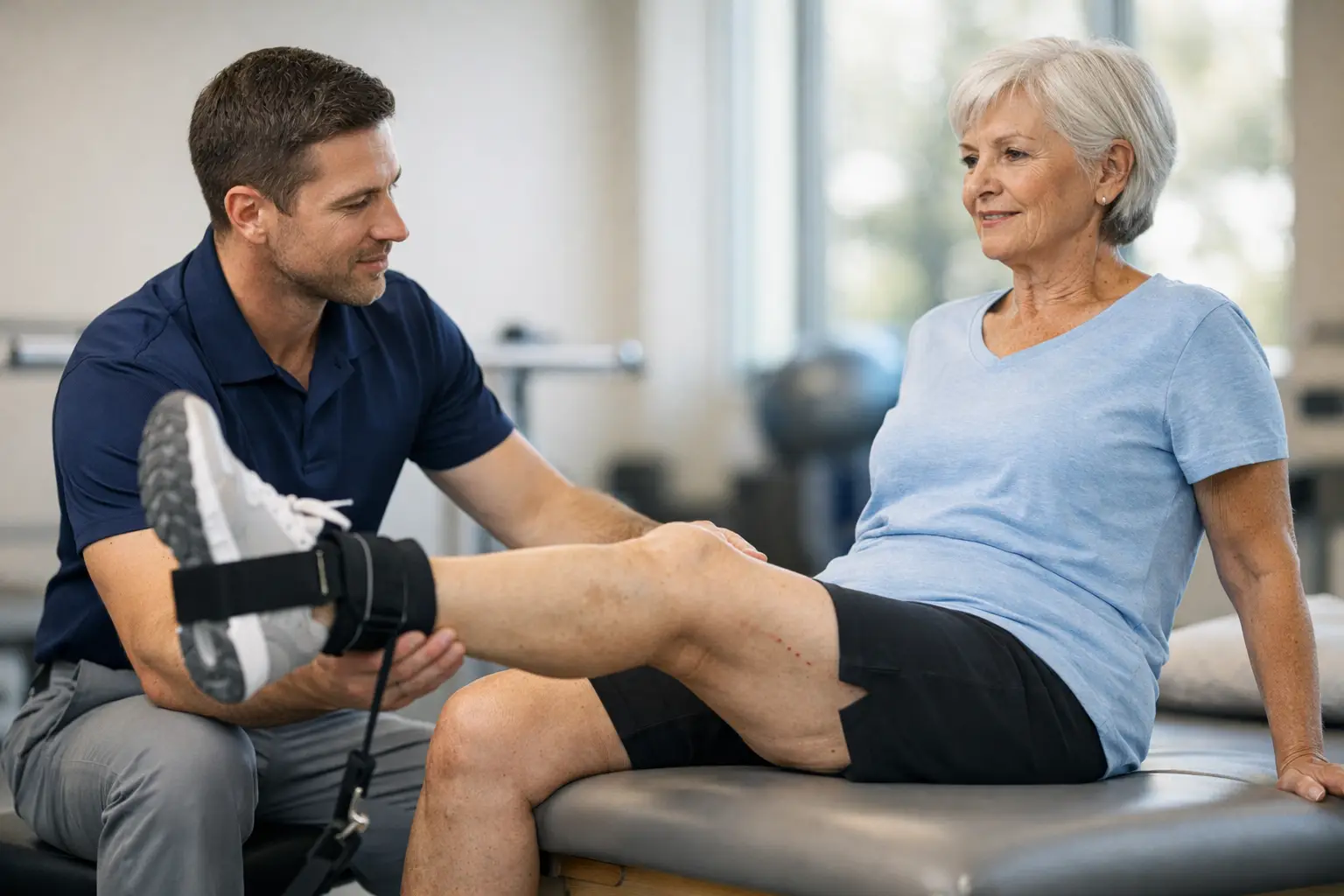
The first time you stand after hip replacement surgery can feel surprisingly unfamiliar. Your hip may be sore and stiff, your leg may feel weak, and ordinary tasks like getting out of a chair can require real concentration. Physical therapy after hip replacement gives you a safe, structured way to rebuild the strength, motion, and confidence that make daily life feel like yours again.
Recovery is not about pushing through pain or meeting someone else’s timeline. It is about progressing at the right pace for your surgery, overall health, home setup, and goals. Whether you want to walk the dog around the neighborhood, return to work, keep up with grandchildren, or get back to the golf course, your therapy plan should connect directly to what matters in your life.
Why Physical Therapy After Hip Replacement Matters
A new hip joint can reduce the pain caused by arthritis or joint damage, but surgery also affects the muscles and tissues that support your hip. Swelling, discomfort, reduced range of motion, and changes in how you walk are common early on. Without guided rehabilitation, it is easy to compensate by leaning, limping, or relying too heavily on the other leg. Those patterns can make recovery slower and may place extra strain on your back, knee, or opposite hip.
Physical therapy addresses more than the joint itself. Your therapist looks at how you walk, transfer in and out of bed or a car, climb stairs, and maintain balance. They help restore strength in the hip, thigh, and core muscles that keep your pelvis stable while you move. Hands-on care, when appropriate, and carefully selected exercises can also help manage stiffness and improve comfort.
The right level of challenge matters. Too little activity can contribute to stiffness and weakness. Too much, too soon, can increase swelling and pain. Your therapist helps you recognize the difference between expected post-exercise soreness and symptoms that mean you need to back off or contact your surgical team.
Your Hip Replacement Therapy Timeline
Every surgeon and procedure has its own protocol, so your surgeon’s instructions take priority. Recovery also varies based on factors such as your age, prior activity level, whether the surgery was routine or complex, and whether you had a hip replacement on one or both sides. Still, most people move through similar phases.
The first days and weeks
Rehabilitation often begins in the hospital or shortly after you return home. The initial focus is practical: safely getting in and out of bed, standing from a chair, walking with a walker or other assistive device, and navigating stairs if needed. You will usually begin simple movements to encourage circulation and activate the muscles around the hip.
During this phase, consistency is more useful than intensity. Short walks throughout the day and prescribed exercises can help reduce stiffness without overwhelming the healing tissues. Swelling often fluctuates, especially after a more active day. Rest, elevation when advised, and ice can be useful tools alongside movement.
Your therapist will also teach you how to move within any precautions provided by your surgeon. Some patients have restrictions related to bending, crossing the legs, or rotating the hip. These precautions can differ depending on the surgical approach and your individual situation, so do not rely on general advice from friends or online videos.
Building strength and steadier walking
As healing progresses, therapy shifts from basic mobility toward better walking mechanics, hip strength, balance, and endurance. You may transition from a walker to a cane and then to walking independently, but the device should be retired only when your gait is safe and controlled. A limp is not always a sign to push harder. It can be a sign that the muscles supporting your hip need more time and targeted training.
Exercises may include controlled leg lifts, bridges, step-ups, sit-to-stands, gentle range-of-motion work, and balance activities. Your program should be adjusted as your symptoms and function improve. If an exercise repeatedly causes sharp pain, significant swelling, or a worsening limp that lasts into the next day, tell your therapist.
Returning to normal routines
In the later stages of recovery, therapy becomes more specific to your lifestyle. A desk worker may need to practice comfortable transitions between sitting and standing and build tolerance for commuting. Someone with a physically demanding job may need to improve lifting mechanics, stair control, carrying tolerance, and endurance. Active adults may work on uneven-ground walking, recreational fitness, or sport-specific movement.
Many people feel substantially better within several weeks, yet strength, endurance, and confidence can continue improving for months. A calendar date alone does not determine readiness for work, driving, or recreation. Your ability to move safely, manage pain and fatigue, and meet the demands of the activity matters more.
What a Personalized Therapy Plan Should Include
A strong outpatient plan begins with an assessment, not a generic exercise sheet. Your physical therapist should review your surgical history, precautions, pain level, incision healing status, mobility, gait, balance, and functional goals. They should also ask practical questions: Are there stairs at home? Do you live alone? What does your work require? What activities are you eager to return to?
From there, treatment should evolve. Early sessions may focus on education, swelling management, safe mobility, and basic muscle activation. Later sessions should challenge strength and balance in ways that carry over to your daily routine. If you enjoy gardening, that might include kneeling and standing strategies. If you need to return to a job that requires standing, therapy may focus on sustained tolerance and safe movement under fatigue.
At Saunders Therapy Centers, an employee-owned care model means your therapist has a personal stake in delivering attentive, practical treatment. For Twin Cities patients, a free consultation can be a useful first step if you are unsure when outpatient therapy should begin or whether your recovery is progressing as expected.
Common Concerns During Hip Replacement Recovery
It is normal to have questions as activity increases. Mild soreness in the muscles around the hip, especially after therapy or a longer walk, is common. Incision sensitivity and swelling may also take time to settle. Your therapist can help you adjust activity, improve movement mechanics, and build a home program that fits your current stage of recovery.
Some symptoms deserve prompt medical attention. Contact your surgeon or seek urgent medical care if you experience:
- Increasing redness, drainage, warmth, or fever that could signal infection
- Sudden severe hip or leg pain, a new deformity, or inability to bear weight
- New calf pain, marked swelling, or tenderness in one leg
- Chest pain, shortness of breath, or coughing up blood
These symptoms are not situations to work through in therapy. Getting timely medical guidance is the safest choice.
How to Get More From Your Therapy Visits
The work between appointments matters, but more is not always better. Follow the home program your therapist gives you rather than adding random exercises found online. The goal is to load healing tissues appropriately, not test the limits of your new joint every day.
Keep your therapist informed about changes in pain, sleep, swelling, medication, and daily activity. A useful detail might be that you feel fine during a walk but ache more that evening, or that getting into the car remains difficult even though indoor walking is easier. Those details help your therapist make meaningful adjustments.
It also helps to measure progress by function, not only by discomfort. Notice when you can stand longer to cook, walk farther with less fatigue, sleep more comfortably, or use the stairs with better control. Recovery often has uneven days, but those small functional gains add up.
A hip replacement can create the opportunity for less pain and more freedom of movement. Thoughtful rehabilitation turns that opportunity into practical progress, one safe step, stronger muscle, and more confident day at a time.