
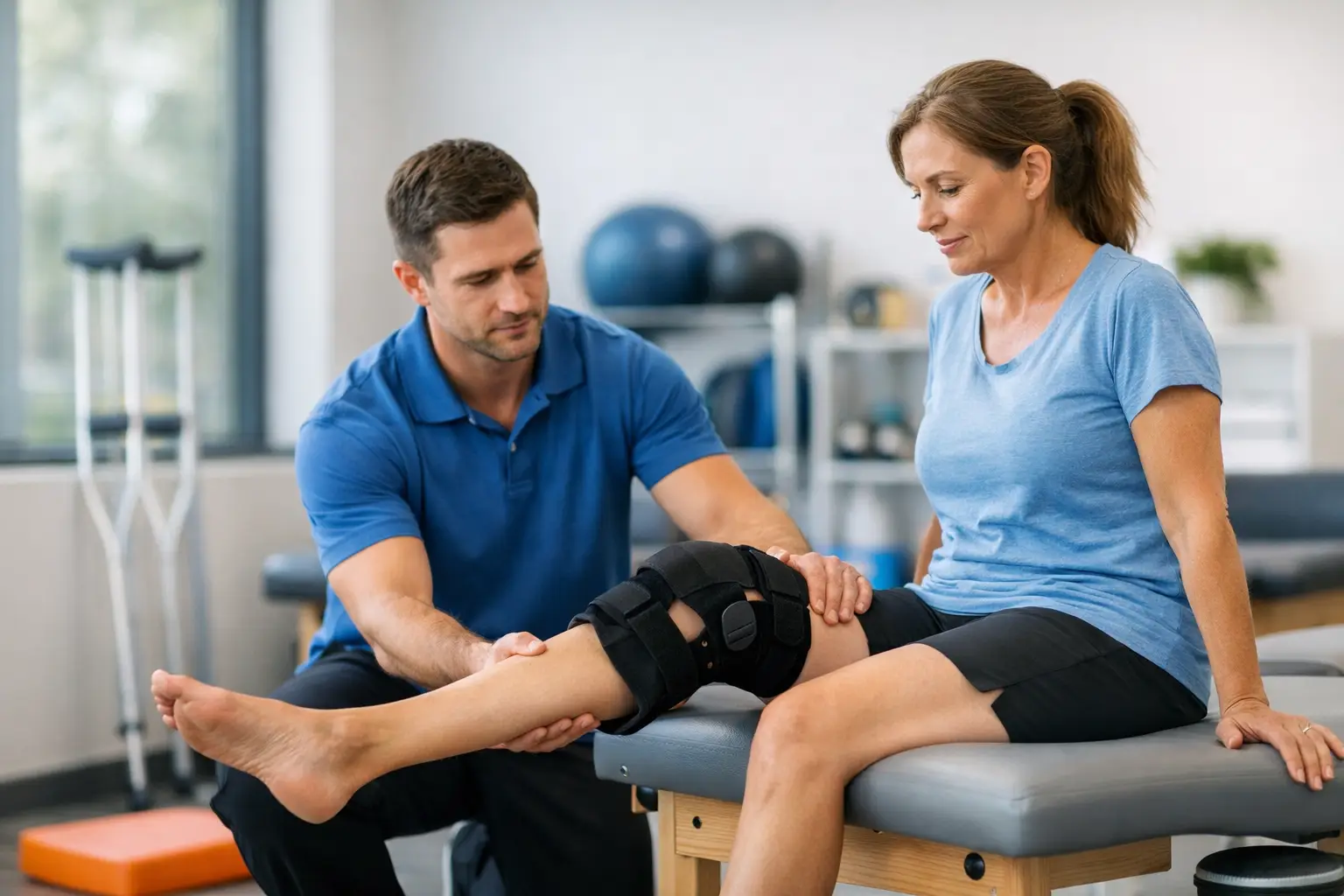
The first few days after knee surgery can feel like a strange mix of relief and frustration. The procedure is done, but the knee is stiff, swollen, and not yet ready to trust. That is exactly where physical therapy after knee surgery matters most. It gives structure to recovery, helps you move safely, and turns a successful surgery into a better functional outcome.
For many people, the biggest question is not whether therapy is necessary, but what it will actually involve. The answer depends on the surgery, your baseline strength and mobility, your pain level, and your goals. Recovering from a total knee replacement looks different from rehab after a meniscus repair or ACL reconstruction. Still, the purpose stays the same – reduce pain, restore movement, rebuild strength, and help you return to daily life with more confidence.
Why physical therapy after knee surgery is so important
Surgery addresses the structural problem, but it does not automatically restore the way your knee moves. After a procedure, swelling can limit motion, pain can change how you walk, and weakness can develop quickly in the muscles that support the joint. Without guided rehab, it is easy to compensate in ways that slow healing or create new problems in the hip, ankle, or low back.
Physical therapy gives you a plan for each stage of recovery. Early on, that may mean controlling swelling, improving knee extension, and helping you walk more normally. As healing progresses, therapy shifts toward strengthening, balance, stair navigation, and more demanding tasks like squatting, kneeling, or returning to sports and work activities.
This process is not just about exercise. Hands-on treatment, gait training, education, and regular reassessment all matter. Good rehab should feel individualized, not like a generic sheet of movements handed over with little explanation.
What to expect in the early phase
The early stage of rehab usually focuses on protection and mobility. Depending on your procedure, you may have precautions related to weight-bearing, bracing, or range of motion. Following those guidelines is important, but so is beginning the right movement at the right time.
In the first phase, your therapist will often pay close attention to swelling, pain response, quad activation, and knee range of motion. One of the most common early priorities is getting the knee to fully straighten. That can sound simple, but it is a key part of walking normally and reducing strain on the joint.
You may also work on bending the knee, getting in and out of bed or a chair, using stairs safely, and walking with an assistive device if needed. For some patients, these basics feel humbling. That is normal. Recovery is rarely linear, especially in the first few weeks.
Pain and swelling are part of the picture
Pain after knee surgery does not always mean something is wrong. Some discomfort is expected as tissues heal and your body adjusts to movement again. The goal of therapy is not to eliminate every symptom immediately. It is to help you improve steadily without pushing so hard that you increase irritation.
Swelling deserves special attention because it can block muscle activation and limit motion. That is one reason early rehab often includes education on elevation, icing strategies, pacing, and home exercises. If the knee stays highly irritated, progress can stall. If it is challenged appropriately, function usually improves more consistently.
How the rehab plan changes over time
As your knee becomes less reactive, therapy starts to build capacity. That means more than simply making the muscles tired. It means improving how the knee handles real-life demands.
Strengthening often includes the quadriceps, hamstrings, glutes, and calf muscles, since they all help support efficient movement. Balance and coordination also become more important as you transition away from crutches or a walker. Even patients who feel generally strong before surgery can be surprised by how much control they have lost on the surgical side.
A well-designed plan progresses based on how you are moving, not just how much time has passed. Timelines matter, but the calendar should not be the only guide. Some people meet milestones quickly. Others need more time because of pain sensitivity, pre-existing arthritis, previous injury, or the physical demands of their job.
Different surgeries, different goals
Not all knee rehab follows the same path. After a total knee replacement, restoring motion, walking tolerance, and day-to-day function may be the biggest priorities. After ACL reconstruction, rehab often places more emphasis on stability, strength symmetry, landing mechanics, and return-to-sport testing. After meniscus surgery, the pace may vary depending on whether the tissue was trimmed or repaired.
This is where individualized care makes a real difference. Two people can have the same surgery and need different progressions. Age, fitness level, work duties, and prior movement habits all shape the best approach.
Common concerns patients have during recovery
One of the most common worries is, “Am I behind?” That question usually comes up when stiffness lingers, sleep is disrupted, or the knee still feels swollen longer than expected. The truth is that normal recovery includes ups and downs. A difficult week does not necessarily mean poor progress.
Another common concern is fear of movement. After surgery, many people become cautious in ways that make sense emotionally but can limit recovery physically. They may avoid fully bending the knee, loading the leg, or walking with a normal stride because it feels vulnerable. Physical therapy helps bridge that gap by making movement safer, more understandable, and more gradual.
People also wonder how hard they should push. There is no perfect formula, which is why monitoring matters. Rehab should challenge you, but it should not leave the knee angry for days. Some soreness can be acceptable. Sharp increases in swelling, heat, instability, or loss of function deserve attention.
Returning to work, exercise, and normal routines
For most adults, success is not measured only by range of motion. It is measured by whether they can get through the day more comfortably and confidently. That may mean standing at work, getting in and out of a car, carrying groceries, walking the dog, or playing recreational sports again.
Return-to-activity decisions should match the demands of the activity itself. A desk job may be possible much sooner than a job that involves ladders, kneeling, lifting, or long periods on your feet. The same idea applies to exercise. Riding a stationary bike is very different from cutting, pivoting, or running on uneven ground.
Physical therapy helps close that gap by building from basic movement to task-specific function. If your work or lifestyle places higher demands on the knee, your rehab should reflect that. Generic strengthening alone may not be enough.
What good therapy should feel like
Good post-surgical rehab should be clear, responsive, and practical. You should understand why you are doing each part of the program and what the next milestone looks like. Your therapist should be tracking not just pain, but motion, strength, walking mechanics, swelling, and functional progress.
It should also feel collaborative. Recovery works better when the plan fits your life. If you are trying to return to a physically demanding job, care should address that. If you are an active adult who wants to hike, golf, or train again, your therapy should build toward those goals safely.
At Saunders Therapy Centers, that kind of individualized care is central to the process. Post-surgical patients often need both reassurance and clinical precision, especially when recovery feels slower or more complicated than expected.
When to seek help sooner rather than later
If you have had knee surgery and are unsure whether you are progressing well, it is worth asking questions early. Persistent stiffness, difficulty straightening the knee, worsening gait mechanics, or ongoing weakness can become harder to address if they are ignored for too long.
Even when everything seems to be healing normally, starting therapy promptly can improve efficiency and confidence. Early guidance helps patients avoid preventable setbacks and understand what is expected at each phase.
The most effective physical therapy after knee surgery is not rushed, but it is intentional. It respects healing while still moving recovery forward. If your knee is asking for more support, that is not a sign of failure. It is often the moment when the right plan can make the biggest difference.
Recovery can be demanding, but it should not feel directionless. With the right guidance, your knee can become more than healed – it can become reliable again.