
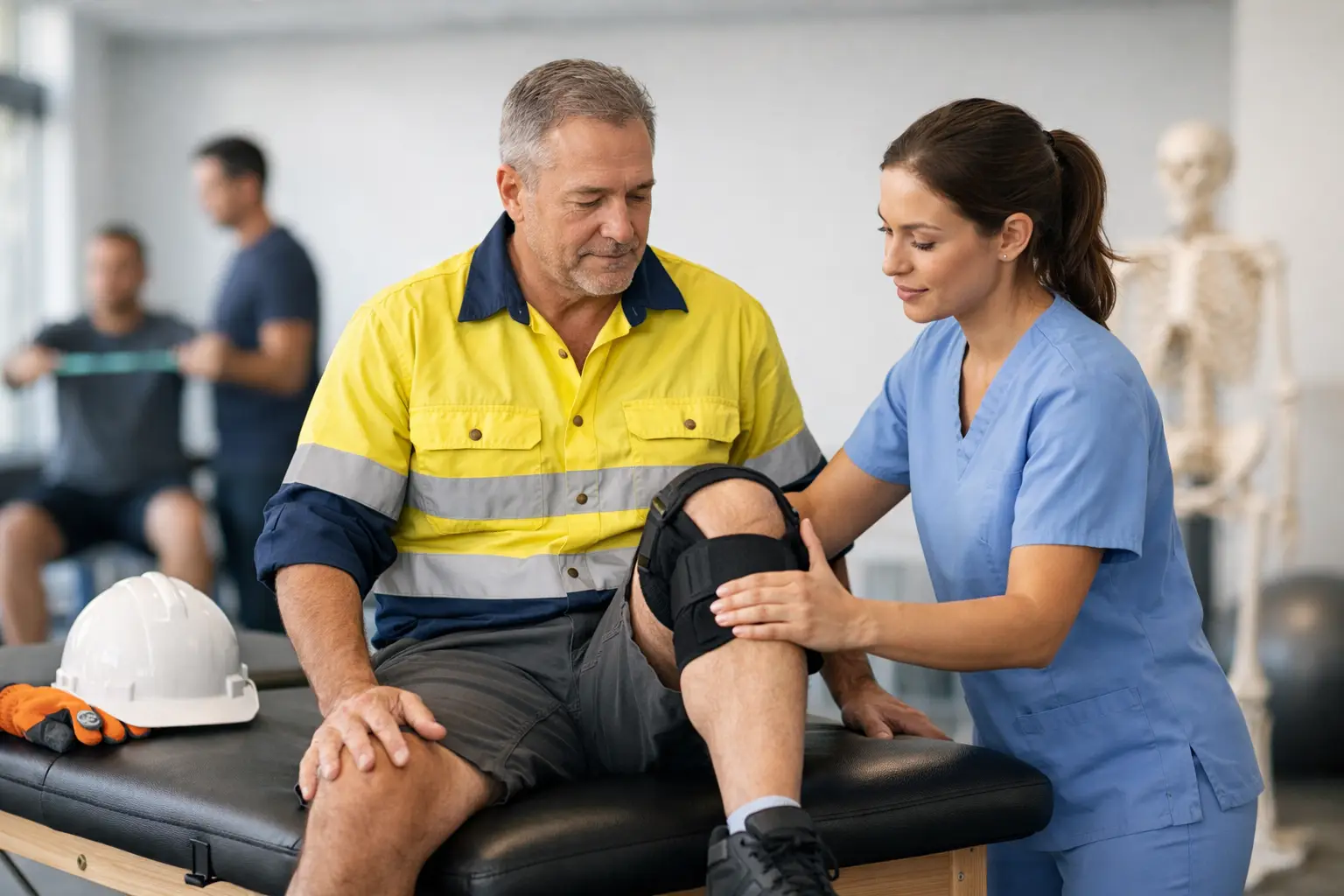
A work injury can turn an ordinary week upside down. One wrong lift, a slip on a wet floor, or hours of repetitive strain can leave you dealing with pain, paperwork, and real questions about what happens next. That is where workers comp physical and occupational therapy can make a meaningful difference – not just in reducing symptoms, but in helping you move safely, function better, and return to work with confidence.
For many people, the hardest part is not the injury itself. It is the uncertainty. You may be wondering who approves care, how long recovery will take, whether pain is normal, or what happens if your job involves heavy lifting, climbing, driving, or standing all day. Good therapy should bring structure to that uncertainty. It should also address the reality that work injuries are rarely just about one body part. They affect sleep, stress, daily routines, and your ability to do the things you need to do at home and on the job.
What workers comp physical therapy and occupational therapy actually involve
Workers comp therapy is rehabilitation provided after a work-related injury, usually as part of a workers’ compensation claim. The goal is not simply to help you feel a little better. The goal is to restore function in a way that matches the physical demands of your job and supports a safe return to work.
That distinction matters. Someone recovering from a shoulder strain who works at a desk needs a different plan than someone who installs drywall, stocks shelves, or transfers patients in a healthcare setting. In a workers’ comp case, therapy should connect symptoms to real work tasks. That means your plan of care may focus on lifting tolerance, grip strength, bending mechanics, balance, endurance, overhead reach, or the ability to tolerate repetitive movement without symptom flare-ups.
Treatment often includes hands-on care, targeted exercise, movement retraining, pain management strategies, and education about body mechanics. It may also involve communication with the referring provider, nurse case manager, employer, or claims team when appropriate. The best approach is individualized, practical, and based on measurable progress.
Why early treatment matters after a work injury
After an injury, many people try to wait it out. Sometimes symptoms do improve with time, but sometimes waiting creates a bigger problem. Pain can lead to guarded movement, reduced strength, joint stiffness, and compensations that stress other areas of the body. A back injury can start affecting the hips. An ankle injury can change the way you walk and trigger knee pain. A neck strain can become a headache problem if it is not addressed well.
Early physical or occupational therapy can help reduce that spiral. When treatment starts sooner, there is often a better chance to control pain, restore movement, and prevent secondary problems before they become harder to treat. Early care also gives you a clearer picture of what is safe to do, which can reduce the fear that often follows an injury.
That said, recovery is not one-size-fits-all. A mild strain may improve quickly. A more complicated injury, a post-surgical case, or a job with high physical demands may require more time and a more structured progression. What matters is having a plan that fits the injury, the person, and the work environment.
What to expect at your first PT/OT visit
A good first visit should feel focused and useful. Your therapist will ask about how the injury happened, what movements aggravate your symptoms, what your job requires, and what your goals are. They will also look at mobility, strength, pain patterns, posture, balance, and movement quality.
In a workers’ comp setting, job demands are especially important. If your work involves squatting, kneeling, carrying materials, climbing stairs, pushing carts, typing for long periods, or working overhead, that information helps shape treatment from the beginning. Your therapist is not just treating an injured shoulder, knee, or back. They are treating the gap between where you are now and what your life and work require.
The first visit is also a chance to set expectations. Some injuries improve steadily. Others have ups and downs. It is common to feel better one week and sore the next as activity increases. That does not always mean something is wrong. It often means your body is adapting, and the program needs to be adjusted with the right amount of challenge and recovery.
Common injuries treated in physical and occupational therapy for workers comp injuries
Work injuries take many forms, but some patterns show up often in outpatient rehab. Low back strains are common, especially in jobs that involve lifting, twisting, or prolonged standing. Shoulder injuries can develop from repetitive overhead activity, forceful pushing and pulling, or falls. Neck pain and whiplash-type injuries may happen after slips, trips, falls, or vehicle-related incidents on the job.
Therapists also commonly treat elbow, wrist, and hand problems linked to repetitive use, along with knee and ankle injuries that affect walking, climbing, and balance. In some cases, pain builds gradually from overuse rather than from one obvious event. Those cases can be frustrating because the symptoms may seem less dramatic at first, but they can still limit work capacity in a major way.
No matter the diagnosis, the key question is functional: what can you safely do today, and what do you need to be able to do next?
How therapy supports a safe return to work
Returning to work is not always an all-or-nothing decision. Some people return with restrictions, reduced hours, or modified duties before they resume their full role. That can be a smart step when it is coordinated well. Activity is often part of recovery, but only if the amount and type of activity match your current capacity.
This is where physical therapy or occupational therapy provides value beyond symptom care. Treatment can be built around work simulation and job-specific progressions. If your job requires repeated lifting from floor to waist, your therapist can train that pattern. If you need to tolerate standing for long shifts, therapy can address endurance and load management. If you have to climb ladders, kneel, or move quickly in tight spaces, treatment should reflect those demands.
A thoughtful return-to-work plan also respects trade-offs. Returning too quickly can aggravate symptoms and delay progress. Staying inactive for too long can lead to deconditioning and make the transition back harder. The right path depends on the injury, your job duties, and how your body responds over time.
Communication matters in workers’ comp cases
Workers’ compensation cases can feel more complicated than standard medical care because there are more people involved. Depending on the situation, your provider, employer, insurer, claims adjuster, and case manager may all play a role. That can create confusion if communication is inconsistent.
Strong therapy clinics help by documenting progress clearly and keeping the focus on function. Objective findings matter. If your lifting tolerance improves, if your range of motion increases, or if your pain no longer limits a specific work task, that information helps support decision-making. Clear communication can also reduce delays and make it easier for everyone to understand where you are in recovery.
For patients, this kind of structure is reassuring. It means the process is not just about checking boxes. It is about showing what has improved, what still needs work, and what the next step should be.
Choosing the right clinic for workers comp physical therapy
Not every therapy experience feels the same. For a work injury, it helps to choose a clinic that understands orthopedic recovery, job-specific rehabilitation, and the practical realities of returning to work. Hands-on care matters. Individualized treatment matters. So does access. If getting started is difficult, progress often gets delayed.
In the Twin Cities, many injured workers are looking for a provider that combines clinical skill with a more personal approach. That is part of why employee-owned practices like Saunders Therapy Centers stand out. When clinicians have a direct stake in care quality and community trust, patients often feel the difference in attention, accountability, and follow-through. At Saunders, our therapists who specialize in return-to-work therapy are both physical and occupational therapists. They work together to help you achieve your goals.
It is also worth looking for a clinic that can adapt care as recovery changes. Some patients need focused orthopedic treatment. Others may need help with balance, dizziness after a fall, headache symptoms after a neck injury, or post-surgical rehab after a work-related procedure. The right setting should be able to meet those needs without making the process feel fragmented.
When to seek help
If a work injury is affecting your movement, strength, sleep, or ability to do your job, it is worth getting evaluated. Do not assume pain has to become severe before it deserves attention. Small problems can become stubborn ones when they are ignored, especially if you keep working through poor mechanics or avoid movement out of fear.
Good workers comp physical therapy gives you more than exercises. It gives you a plan, a way to measure progress, and a clearer path forward when work and recovery are pulling on you at the same time. When care is individualized and grounded in real function, rehab starts to feel less like a delay and more like a way back to normal life.