A rolled ankle during a weekend run. Shoulder pain that builds every time you swim. A knee that never felt quite right after pickup basketball. When people search for sports injury rehabilitation near me, they are usually not looking for generic advice. They want to know where to go, how soon to start, and whether the care they choose will actually help them get back to the activities that matter.
That search deserves a careful answer, because sports rehab is not just about healing tissue. It is about restoring confidence, movement quality, strength, and control so you can return to training, competition, work, and everyday life without feeling like you are one wrong step away from another setback.
What sports injury rehabilitation near me should actually include
Good sports rehabilitation starts with a clear understanding of the injury, but it should not stop there. The best care looks at how the injury happened, what movements are limited now, and what your body needs to do before you return to full activity. That process is different for a runner with Achilles pain than it is for a tennis player with elbow irritation or a skier recovering from ACL surgery.
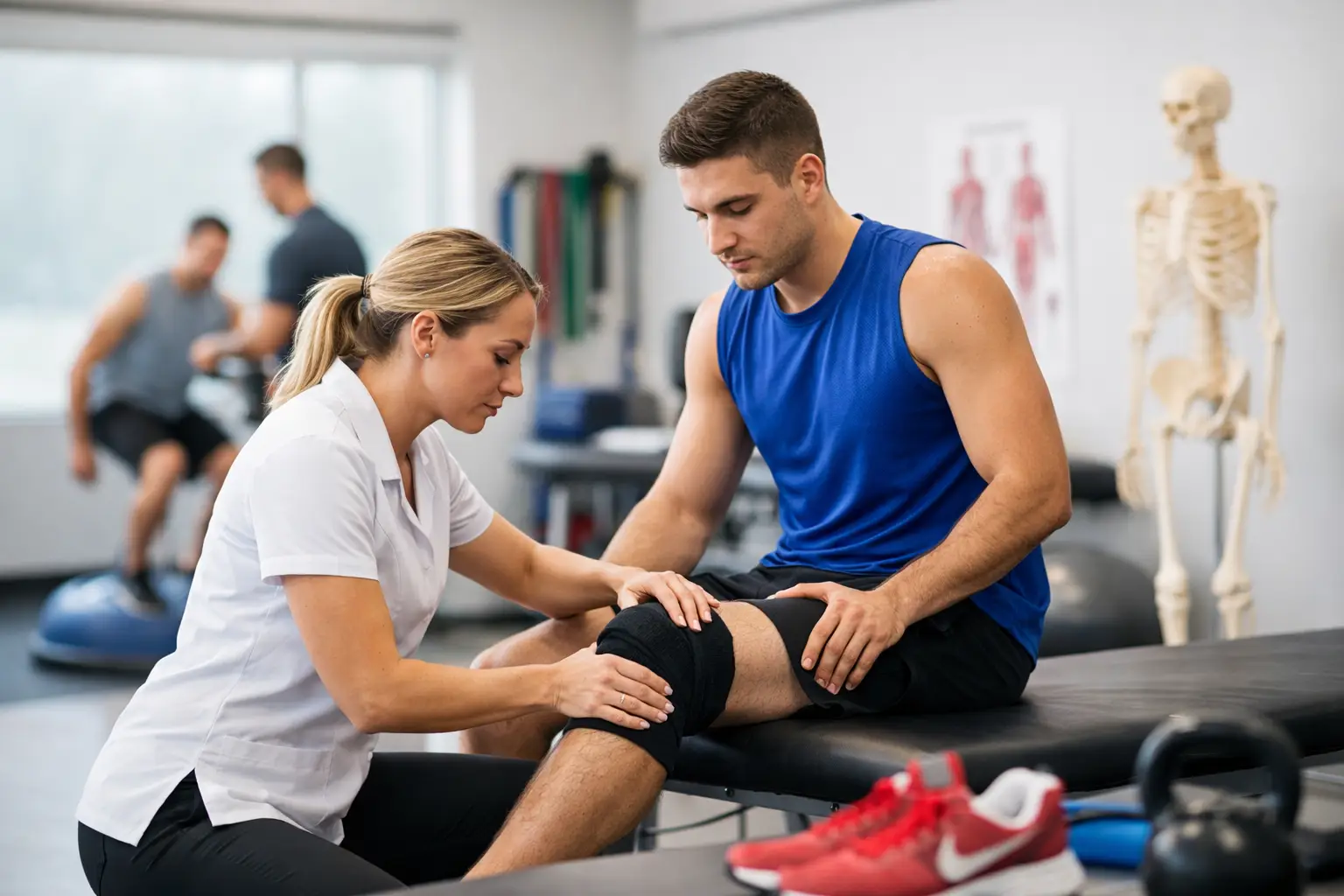
A strong rehab plan usually includes pain management, mobility work, progressive strengthening, balance and coordination training, and sport-specific movement retraining. Hands-on treatment can help when stiffness, muscle guarding, or joint restriction are part of the problem. Targeted exercise matters too, but exercise should be prescribed for your injury, your goals, and your current tolerance, not handed out as a one-size-fits-all sheet.
This is where personalized outpatient therapy stands apart. A therapist should track how you are moving, how symptoms respond between visits, and whether the plan is moving fast enough without pushing so hard that you flare up. Recovery is rarely perfectly linear. Some injuries improve quickly. Others need closer pacing and more adjustment along the way.
When to start sports injury rehab
Many people wait too long. They hope pain will settle on its own, or they assume they need a referral before anything can happen. In reality, early evaluation often helps prevent a minor injury from becoming a longer interruption.
That does not mean every ache needs intensive treatment. Some soreness after a hard workout improves with rest, sleep, hydration, and a temporary decrease in training load. But if pain is changing how you move, limiting performance, lingering beyond several days, or returning every time you try to resume activity, it is time to get it looked at.
Early rehab can reduce swelling, improve movement, and keep surrounding muscles from weakening while the injured area settles down. It can also answer the question many active adults struggle with most: should I keep training, modify training, or stop for now? That guidance matters, especially when you are trying to balance recovery with work, family, and a schedule that does not leave much room for trial and error.
Common injuries that benefit from rehabilitation
Sports injuries are not limited to competitive athletes. Active adults, recreational runners, gym members, and people who simply want to stay mobile all benefit from focused rehab when pain starts interfering with movement.
Some of the most common problems seen in outpatient therapy include ankle sprains, knee pain, ligament injuries, rotator cuff strain, shoulder instability, tennis or golfer’s elbow, Achilles tendinopathy, hamstring strains, low back pain, neck pain, shin splints, and overuse injuries related to training volume or poor mechanics. Post-surgical rehabilitation is another major part of sports recovery, especially after ACL reconstruction, meniscus repair, labral procedures, tendon repairs, and fracture care.
The diagnosis matters, but so does the pattern. Two people with the same injury label may need very different rehab plans. One may need to restore strength after a clear traumatic injury. Another may need to correct movement overload that has been building for months. That is why a detailed evaluation is so important.
What to look for when comparing local rehab options
If you are searching for sports injury rehabilitation near me, convenience matters. A clinic close to home or work makes it easier to attend consistently, and consistency affects outcomes. But location should not be the only factor.
Look for a provider that offers individualized evaluation and progression rather than a high-volume experience where exercises are handed out with minimal follow-up. Ask whether treatment includes hands-on care when appropriate, whether therapists have experience with orthopedic and sports-related injuries, and whether your program will be adjusted based on your sport, position, training demands, or work requirements.
Access also matters. If you can begin with a consultation or direct-access visit instead of waiting on extra steps, you can often get answers faster and start the right plan sooner. For many people, that speed makes a real difference. Pain is easier to manage early, and movement compensations are easier to correct before they become habits.
It also helps to choose a clinic that treats the whole person. Sports injuries do not happen in isolation. A runner may also be dealing with low back stiffness. A hockey player may have neck symptoms after a fall. An active parent may need to recover enough to coach, lift kids, and sit through a workday, not just return to exercise. Rehab should reflect real life, not just a textbook recovery timeline.
Why sport-specific progression matters
One of the biggest mistakes in rehabilitation is stopping too early. Pain may be better, swelling may be down, and daily walking may feel normal, but that does not always mean you are ready to cut, jump, sprint, throw, or lift at full intensity.
Sport-specific progression bridges that gap. It takes you from symptom relief to performance readiness. For a basketball player, that may mean landing control, direction changes, and confidence with deceleration. For a golfer, it may mean trunk rotation, hip mobility, and tolerance for repeated swings. For a runner, it often means graded loading, cadence or form adjustments when needed, and a plan for returning to mileage without reigniting symptoms.
This phase is where careful clinical judgment matters. Move too slowly and recovery drags out longer than necessary. Move too fast and the injury can flare or return. The right pace depends on healing timelines, tissue tolerance, strength deficits, balance, movement quality, and your specific goals.
Rehab is not only for athletes
The phrase sports injury can make some people feel like treatment is only meant for competitive athletes. That is not the case. If an injury happened while walking the dog, training for a 5K, playing weekend pickleball, lifting at the gym, or staying active with your kids, rehabilitation can still be the right next step.
In fact, many adults in the Twin Cities are trying to stay healthy through movement while also managing demanding schedules and previous injuries. They are not chasing a championship. They just want their knee to stop swelling after a workout, their shoulder to tolerate overhead activity again, or their balance and strength to improve after a fall or surgery.
That wider perspective matters because successful rehab should improve function beyond the sport itself. It should help you move better at work, sleep with less discomfort, manage stairs more easily, and trust your body again.
A local, personalized path back to activity
For Twin Cities patients, local access to skilled outpatient therapy can make the difference between guessing your way through recovery and following a clear plan. At Saunders Therapy Centers, that means individualized care designed around pain relief, movement restoration, and practical return to function, with the option to start through direct access and a free consultation rather than waiting through extra barriers.
The goal is not to keep you in therapy longer than needed. It is to identify what is limiting recovery, treat it directly, and build a progression that makes sense for your body and your life. Sometimes that means a short course of care and a home plan. Sometimes it means more structured rehabilitation after surgery or a stubborn overuse injury. It depends on what is actually going on, not what a generic protocol says should happen.
If you are typing sports injury rehabilitation near me into a search bar, you are probably ready for answers, not more delay. The right rehab should give you both a diagnosis-informed plan and a realistic path forward. Start early, ask good questions, and choose care that treats your goals with the same seriousness as your injury.