
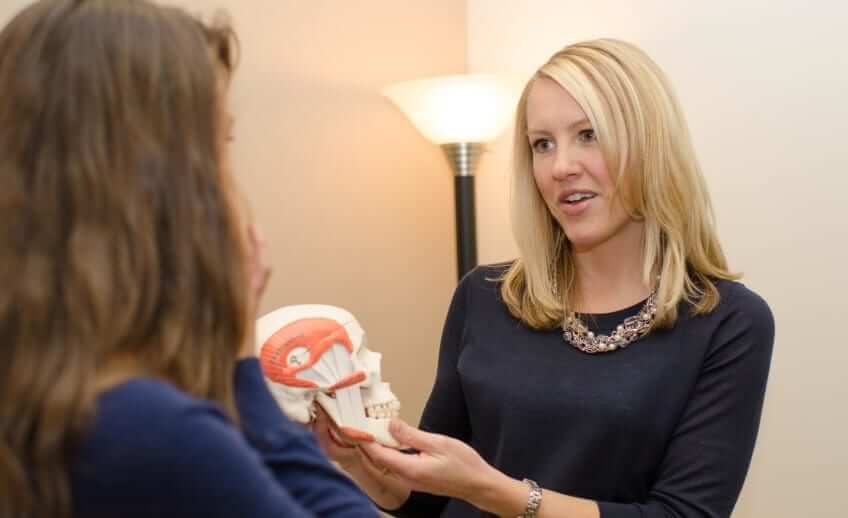
How do you tell if your facial, head, or neck pain is related to your temporomandibular (TMJ) joint? The TMJ is the hinge joint that opens and closes your jaw. The joint can be palpated just in front of the ear, or from inside the ear. The muscles that operate this joint to open and close the jaw can be palpated along the temple, jawbone, and from inside the mouth. Sometimes, you can feel pain directly in the area around the joint, but there are other symptoms you should be aware of:
- Neck pain
- Aching facial pain
- Headache
- Pain or tenderness of the jaw muscles
- Aching pain in or around the ear
- Difficulty with or pain with chewing
- Jaw “locking” or difficulty opening or closing
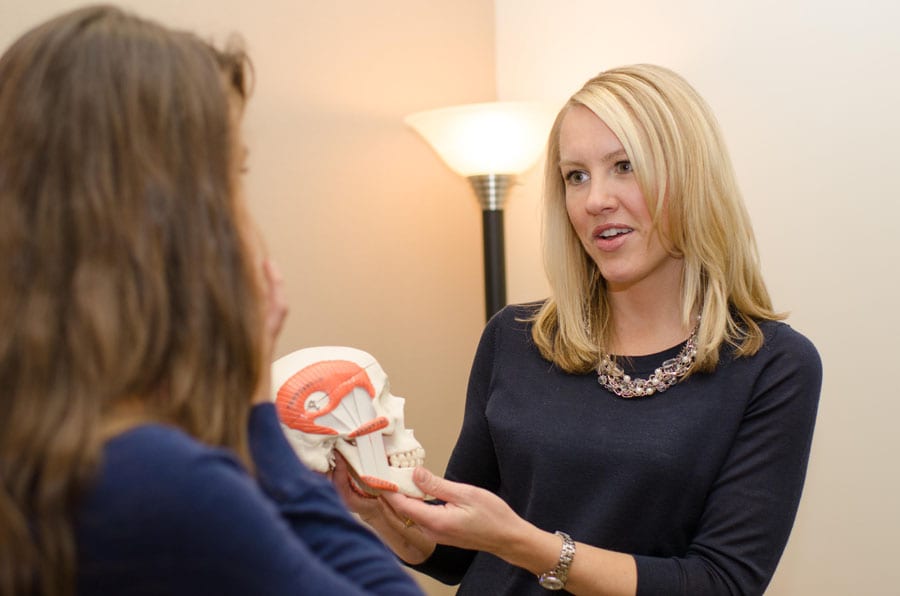
It is common for people with TMJ disorders to also have neck problems. Neck posture definitely affects the mechanics of the TMJ and correction of posture and treatment of neck dysfunction is often key to TMJ pain or headache relief. At Saunders Therapy Centers, we provide a thorough evaluation of the head, neck, and jaw to identify the source of your symptoms. Using this information, we create a personalized treatment plan focused on reducing pain, improving function, and helping you return to your daily activities.